【Yokai & Mystery】 Four shrines and temples dedicated to Oiwa(Tokyo pref.)
This article introduces four shrines and temples associated with "Oiwa-san," one of Japan's most famous ghost stories.. (Nihedon @ KesaranPasaran Lab)
1)Oiwa Inari Tamiya Shrine (Yotsuya), 2)Youunji Oiwa Inari, 3)Oiwa Inari Tamiya Shrine (Shinkawa), 4)Myogyoji Temple
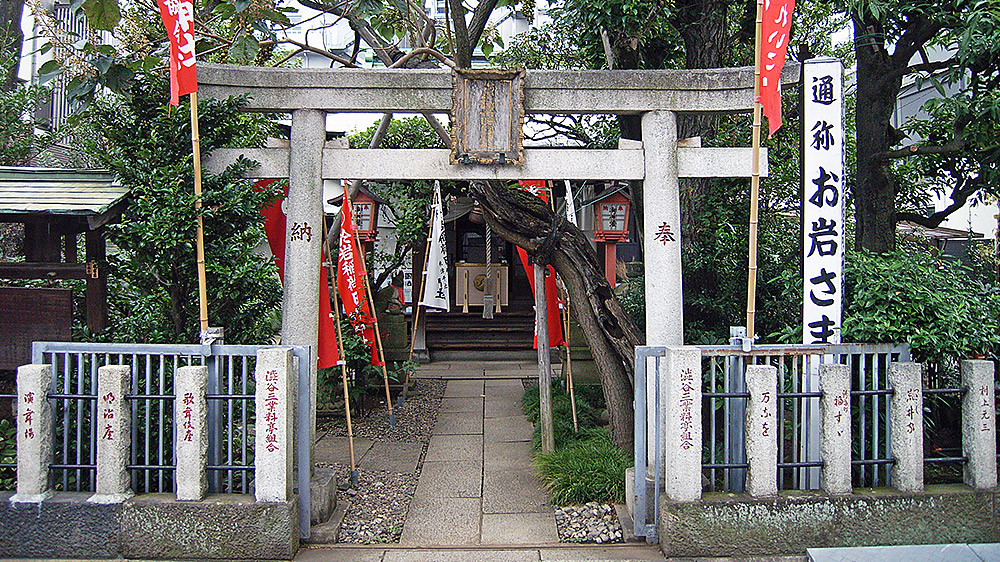
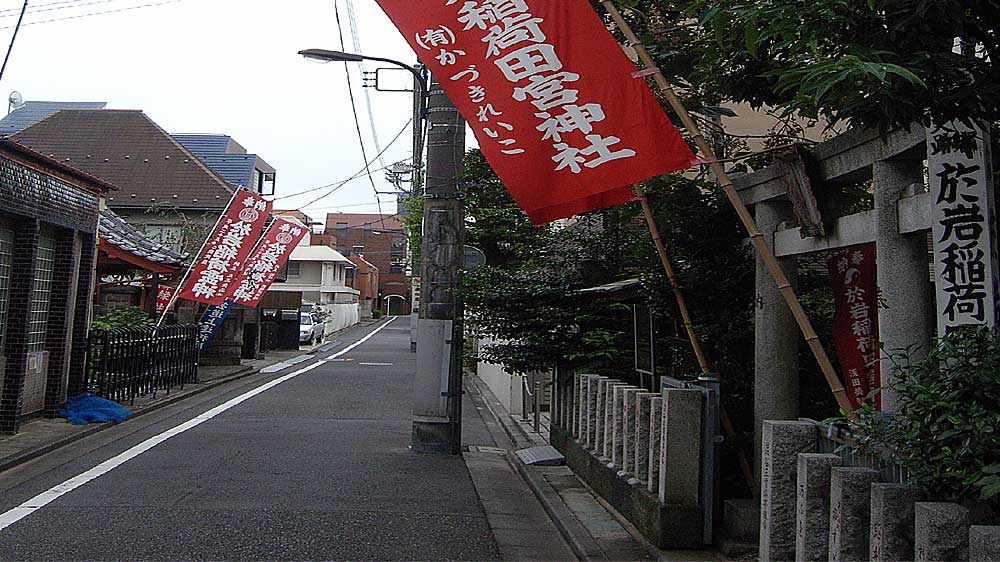
This is Oiwa Inari Tamiya Shrine, one of the two top shrines in Yotsuya dedicated to Oiwa. "Tamiya" is the name of Oiwa's family home (in the legend of Oiwa), so it feels like it has a high degree of authenticity as the main branch of the family.
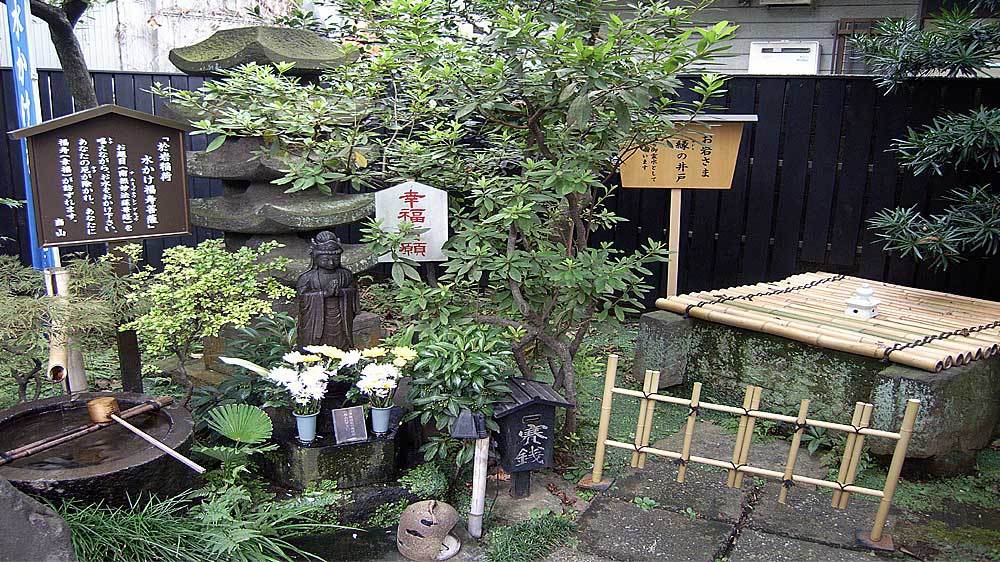
This is "Younji Oiwa Inari." The temple grounds are decorated like an "Oiwa theme park," and it might be the most popular temple in terms of the number of visitors.
The Oiwa Inari Tamiya Shrine (in the foreground) and the Younji Oiwa Inari are located so close to each other, yet both claim to be the "original" shrine. This is even more terrifying than the Yotsuya Ghost Story...
I'll skip explaining why this "dispute over who the original shrine is" arose, as it's quite complicated, but those interested can look it up themselves!
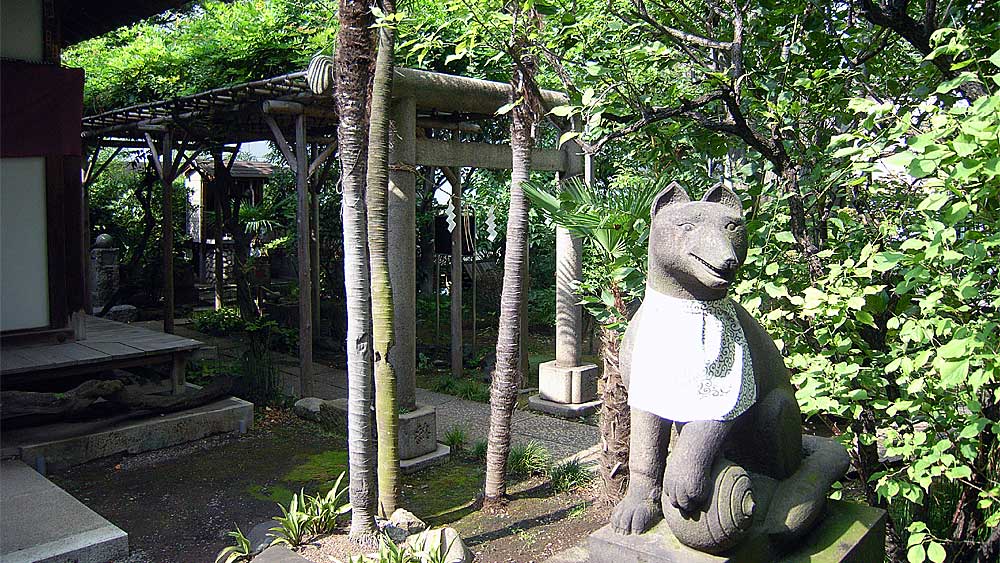
This shrine has the exact same name as the one in Yotsuya. Apparently, the Yotsuya shrine was moved to this location after a fire in 1879 (Meiji 12), and the original Yotsuya shrine was later rebuilt, resulting in the existence of two shrines with the same name.
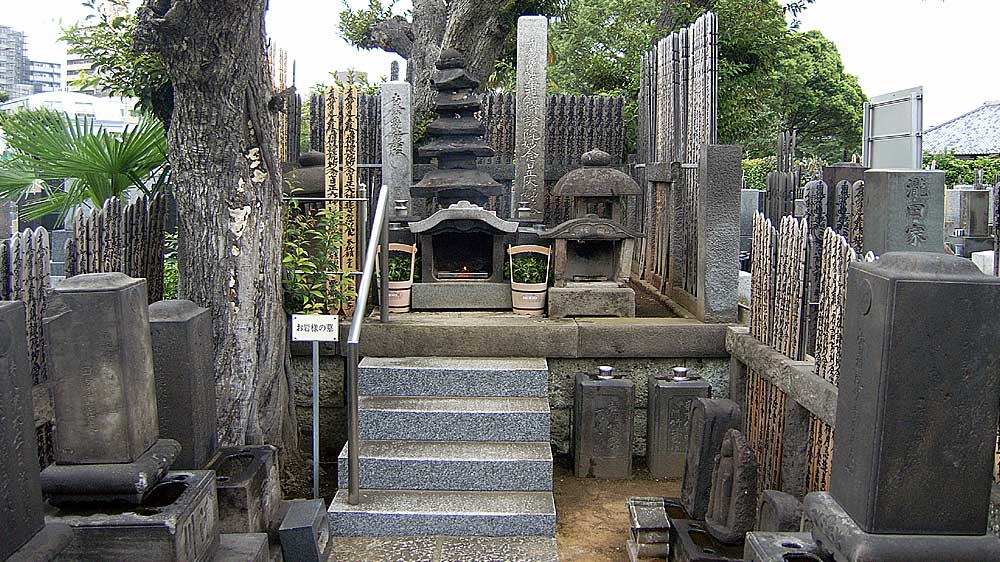
実在したであろう「お岩さん」のお墓があるのがこの「妙行寺」です。なんでももともとは四谷にあったお寺が明治42年に西巣鴨に移転してきたとのことです。
In fact, in Japan, there's a belief that the resentment of someone who died harboring deep hatred can be purified by enshrining them as a god.
In such cases, the stronger the person's hatred during their lifetime (the greater the public's perception of that hatred), the more likely they are to be elevated to a higher-ranking deity.
For example, ?kuninushi-no-Mikoto, who ceded his country to the Tenson-line gods (a force connected to the Yamato court), is enshrined at Izumo Taisha, Japan's largest shrine. Similarly, Taira no Masakado, who declared himself "New Emperor" and was defeated as an enemy of the court, is enshrined at Kanda My?jin as the "Guardian of the Kanto Region."
Besides them, there's also Sugawara no Michizane, who was suspected of rebellion and died in exile harboring resentment, yet is still worshipped as the "god of learning." There are countless examples like this.
As a science-minded old man, I don't believe that "grudges" themselves exist, but I understand that there are many people who believe in them, and for such people, the lingering presence of grudges is unsettling.
Perhaps those people, wanting to somehow purify that resentment, created a culture of "deifying those who died consumed by resentment" as a "system for purifying resentment"?a "method for believing that the resentment had been purified."
The idea of ??"purifying the hatred a person harbored during their lifetime by deifying them after death" seems, in a sense, a kind of "avoiding conflict" mentality and rationalization inherent in the Japanese. However, it's also true that this way of thinking is one of the important ideas for sustaining Japanese community society.