【Town & Gourmet】  Salamander dishes (Fukushima pref.)

Hinoemata Village was a remote, secluded area until the early Showa period. Surrounded by mountains nearly 1000 meters high, and unsuitable for rice cultivation, it fostered a unique culinary culture.

This is known as "Yamoudo Ryori" (mountain cuisine), which uses ingredients such as buckwheat noodles, wild vegetables, game meats like bear, deer, and rabbit, and river fish like char. But personally, I'd like to highlight the "salamander dishes."

I first visited this area in 2005 to eat salamanders. Located in the northern part of Oze National Park, between Aizu and Uonuma, it's a wonderful place where untouched Japanese nature remains, offering a quintessential Japanese landscape.  (Nihedon @ KesaranPasaran Lab)

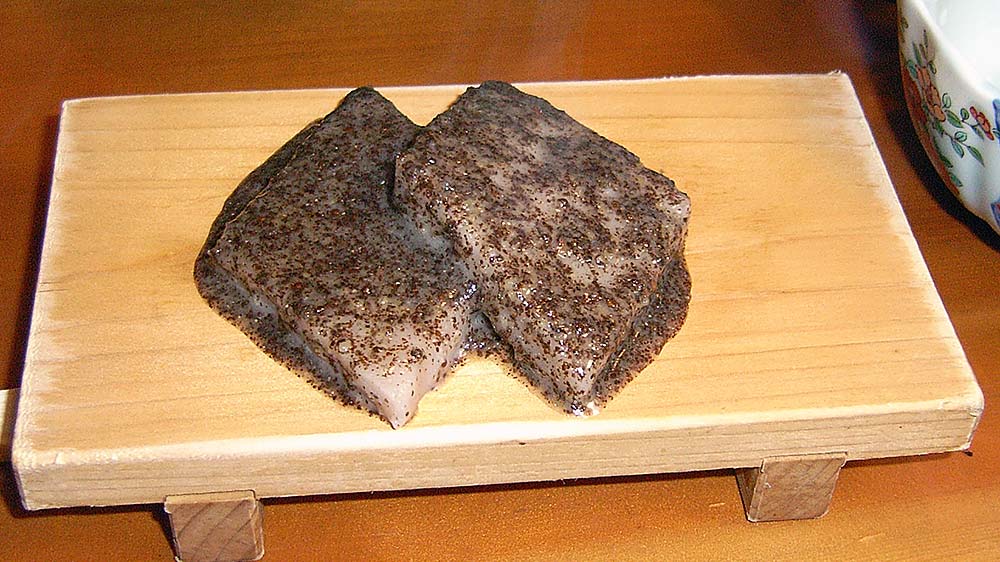
Hattou

This dish is made by mixing buckwheat flour and glutinous rice flour, kneading the mixture, and then boiling it. It is served with a sweet sesame sauce.

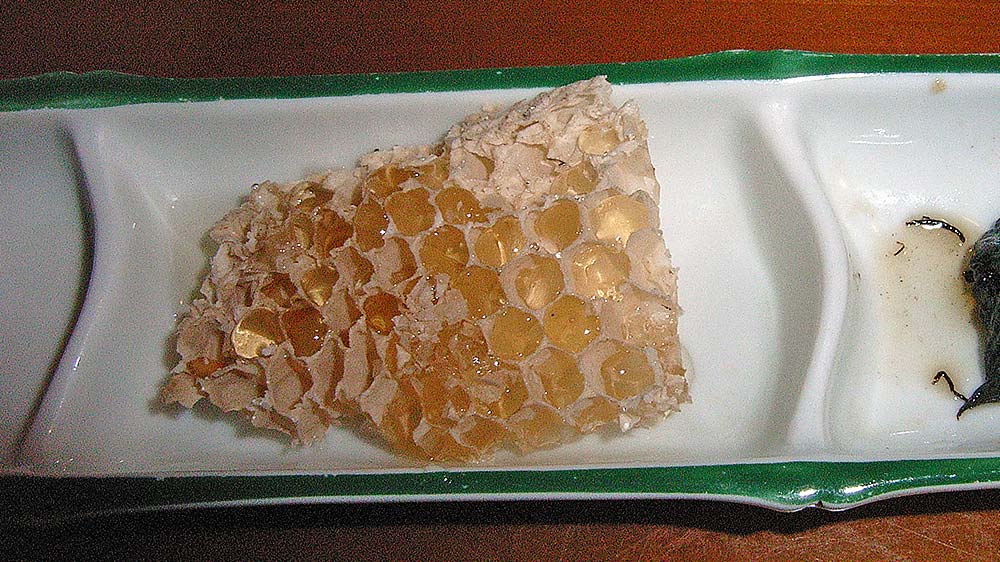
Eating honey, honeycomb and all.

Even though I don't usually like sweet things, I actually enjoyed this quite a bit. It surprisingly paired well with sake, and I think it would go well with beer and whiskey too.

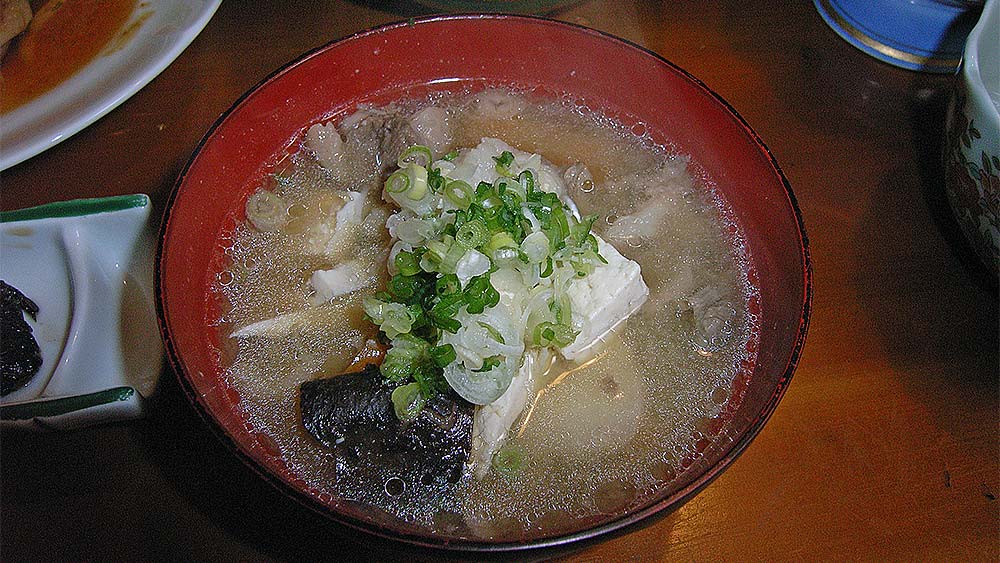
Kodsuyu

A soup containing taro, tofu, and wild vegetables. This representative local dish from the Aizu region, with its flavorful broth made from scallops, is perfect for a hangover morning.

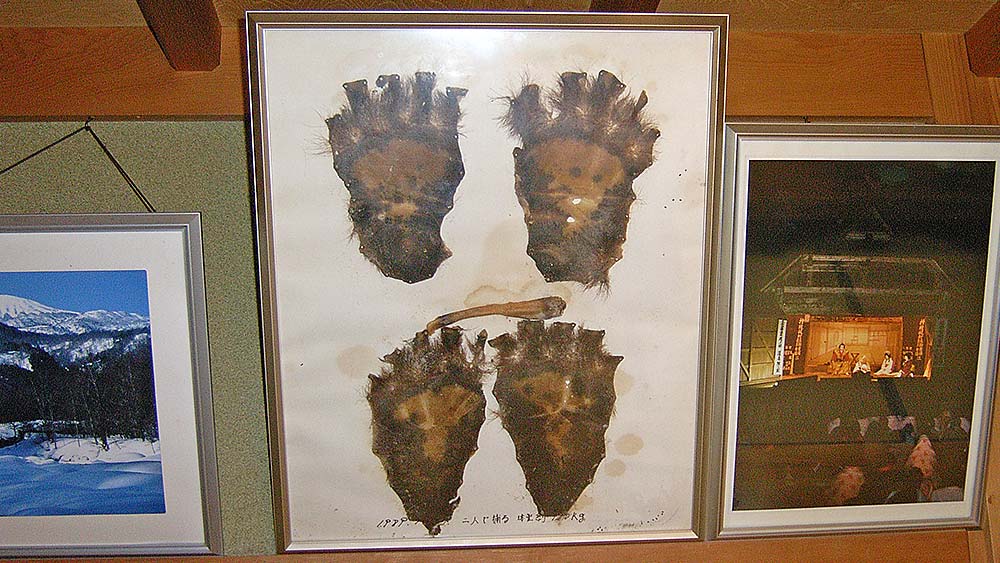
Wao!!

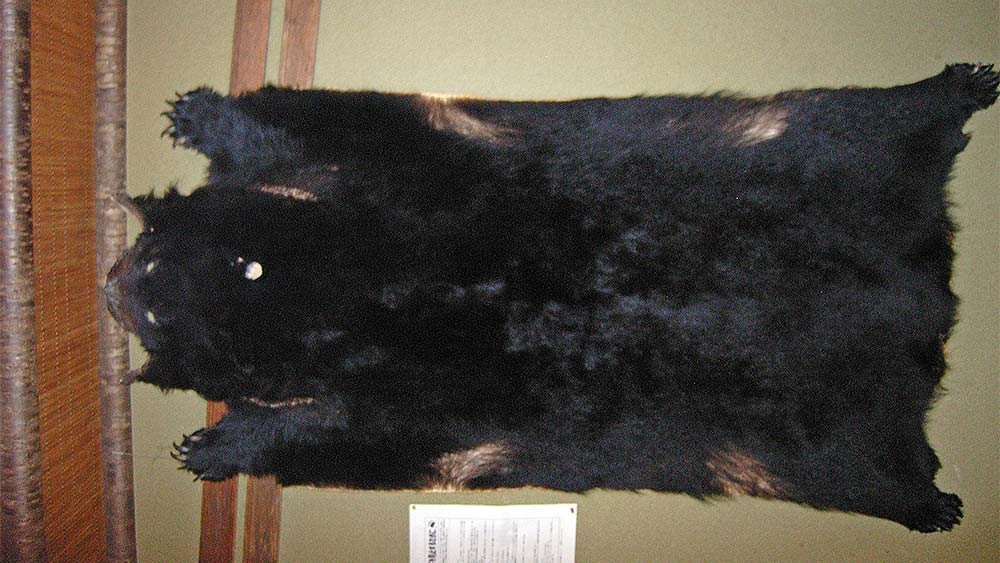
A stuffed bear's paw and foot was casually displayed in the shop. I'd never seen anything like it before. It's kind of appetizing, isn't it? (Of course not!)


The 10 things I learned at Hinoematamura & Salamander


01)Almost all residents of Hinoematamura have only three types of family names: 'Hoshi', 'Hirano', and 'Tachibana'.

02) It seems that the person who introduced salamander cuisine to Hinoematamura was a man named "Minokichi" from Kawamata, Tochigi Prefecture, sometime between the end of the Meiji era and the beginning of the Taisho era.

03) Minokichi has three children, Hoshi Tomikichi, Tomijirou, and Kazusaburou, and the salamander cooking methods have been passed down to them.

04) Furthermore, Tomikichi's son, Hoshi Yutaka, is currently an active "master salamander hunter."

05) In Kanpou medical theory, salamanders are said to have nourishing and invigorating effects, as well as suppressing childhood colic.

06) Salamander dishes were once considered an ingredient in an "elixir of immortality."

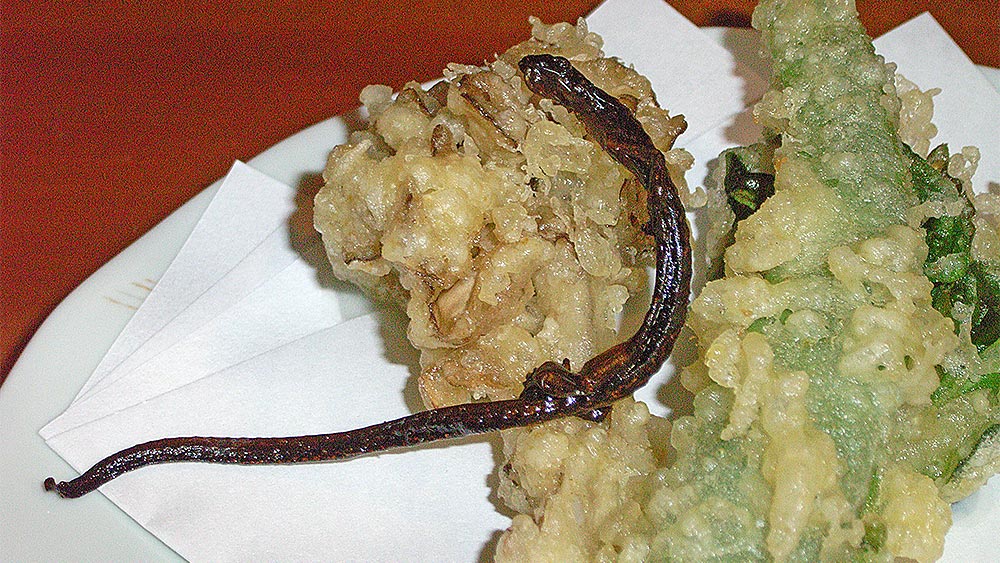
07) Typical ways of eating salamanders include smoking and then grilling, tempura, deep-frying, and salt-grilling. (These are cooking methods introduced to Hinoemata Village by "Minokichi.")

08) It is also said that eating a male and female salamander pair together will increase virility.

09) The salamanders eaten at Hinoematamura are of the Hakone salamander species, which is a completely different species from the Japanese giant salamander, which is designated as a special natural monument.

10) In Hinoematamura, a unique fishing method is employed for salamander fishing: "A stream where salamanders have been caught is left to rest for two years."
This method is also taught by Hoshi Yutaka, the grandson of Minokichi.
It's a truly ecological fishing method that aligns with the natural cycle. Truly befitting of the Minokichi family!


The innkeeper shot down a bear!


ACCESS : Please check the site below


Official site